HIGH IMPACT TEACHING STRATEGIES
Excellence in Teaching and Learning


Overview
A lesson structure maps teaching and learning that occurs in class.Sound lesson structures reinforce routines, scaffold learning via specific steps/activities.
They optimise time on task and classroom climate by using smooth transitions. Planned sequencing of teaching and learning activities stimulates and maintains engagement by linking lesson and unit learning.

Key Elements
-
Clear expectations
-
Sequencing and linking learning
-
Clear instructions
-
Clear transitions
-
Scaffolding
-
Questioning/feedback
-
Formative assessment
-
Exit cards

Related Effect Sizes
-
Scaffolding – 0.53
-
Formative evaluation – 0.68
-
Teacher clarity – 0.75
This strategy is demonstrated when the teacher:
Explains to students the steps in the lesson, including presenting learning intentions, explicitly presenting new knowledge, identifying planned opportunities for practice, outlining questioning techniques the class will use, and describing the assessment formats.
Makes clear connections between the learning goals, activities and assessment tasks.
Creates transparent, predictable and purposeful routines for students
Identifies clear transitions between each step in the lesson
Plans the sequence of steps to scaffold student learning
Monitors student understanding and provides feedback.
This strategy is NOT demonstrated when the teacher:
lesson structures keep changing, producing unhelpful unpredictability in the classroom environment.
This strategy is demonstrated when students:
Understand the learning goals and success criteria
Understand the lesson routine and confidently negotiate the
sequence of steps/activities.


Typical problems of practice in this area:
Students do not know what they are learning or why
No alignment between learning goals and activities
Possible LfL questions to ask students


How does today's work relate to what you have done previously?
Why do you think you are doing this activity?
What do you think you will be learning next?
JS: “What connection can you make to this learning and something you have learned before?”


-
Learners experience supportive, respectful, and authentic relationships
-
Learners thrive in an environment that is both safe and challenging
-
Learners understand the purpose of their learning
-
Learners readily connect new learning with previous knowledge, concepts and skills
-
Learners feel individually challenged at an appropriate level
-
Learners have increasing agency in their learning
-
Learners receive ongoing feedback
-
Learners experience a range of learning and teaching methodologies
-
Learners have ample opportunities to practise
-
Learners have regular opportunities to collaborate with and learn from others
Reminder of the TLPP


Training Materials from GTT (Great Teaching Toolkit)

Element 1.1 Deep and fluid knowledge

Element 1.2 Curriculum sequencing

Element 1.3 Relevant curriculum tasks
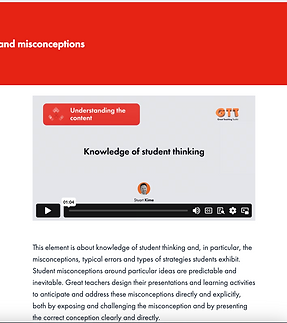
Element 1.4 Strategies and misconceptions

Element 3.1 Managing time and resources

Element 4.1 Structuring
How the Great Teaching Toolkit supports this HIT
Element 1.1 Deep and fluid knowledge: See article “Better planning: better teaching, better learning (a template)”
Element 1.2 Curriculum sequencing
Element 1.3 Relevant curriculum tasks
Element 1.4 Strategies and misconceptions
Element 3.1 Managing time and resources (This element has a focus on classroom routines and strategies for managing poor behaviour)
Element 4.1 Structuring